Fréchet ECG Distance (FED)
Key: fed · Family: distribution · Better: lower ↓ · Per-lead: no ·
Extras: pip install "ecgen-eval[fed]" (installation)
FED asks: if a model that has seen millions of real ECGs describes each recording as a vector, do the real and synthetic sets look like the same population? It is the ECG counterpart of the Fréchet Inception Distance (FID) used for images.
Try it
Each dot is one ECG, placed by two of the foundation model's embedding dimensions (real embeddings have hundreds of dimensions; the demo shows two). FED fits a Gaussian to each cloud, drawn here as an ellipse, and measures how far apart the two Gaussians are.
What to notice:
- Shifted mean raises only the mean term: the synthetic ECGs are systematically different, for example in heart rate or amplitude.
- Too little variety raises the covariance term. A generator that produces near-identical ECGs (mode collapse) is penalised even when its average ECG is perfect.
- Wrong correlation keeps both clouds centred and equally wide, but the relationship between features is wrong. FED still sees it.
- Only 30 samples: identical distributions no longer score 0. Fréchet distances are biased upward for small samples, so the real vs real card is the floor you should compare against.
How it works
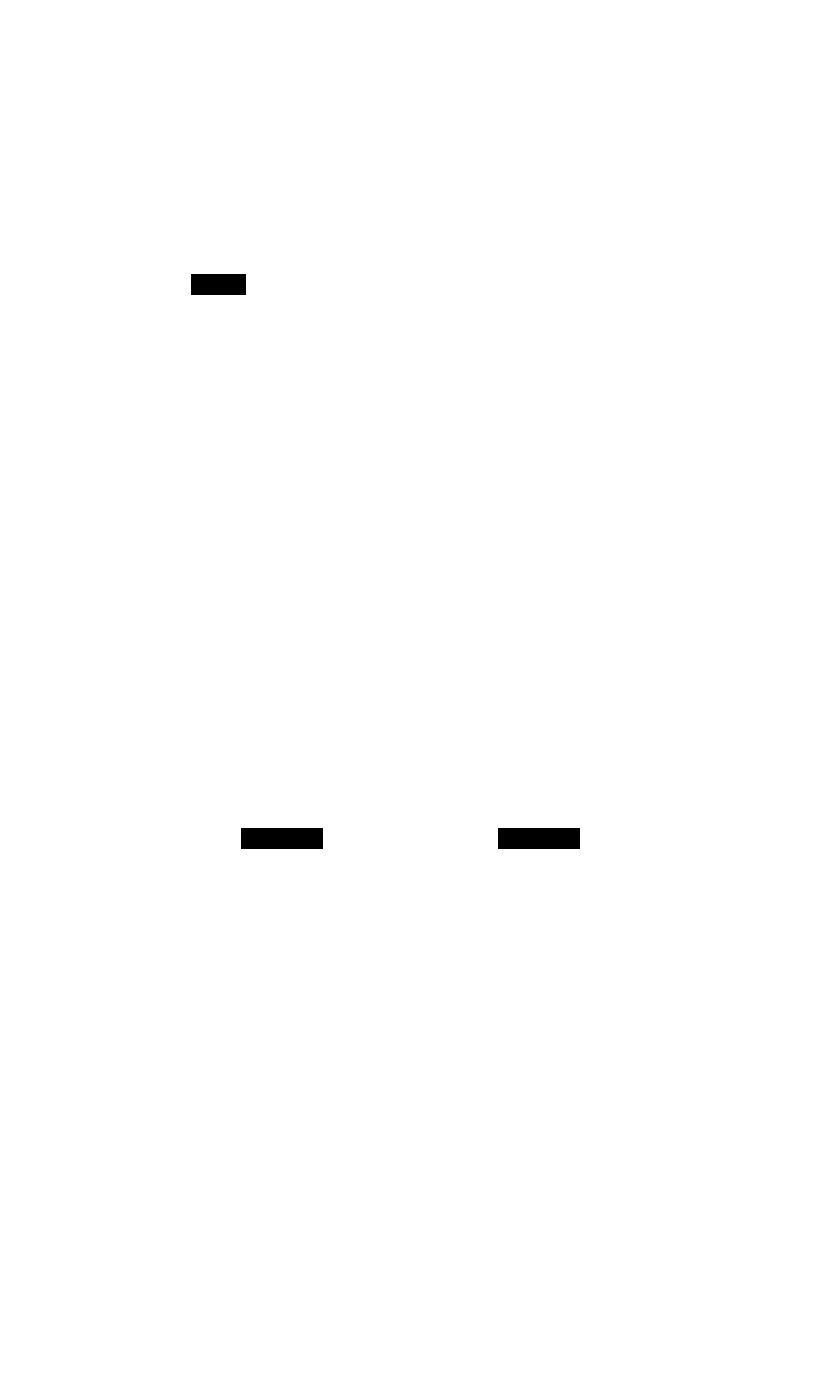
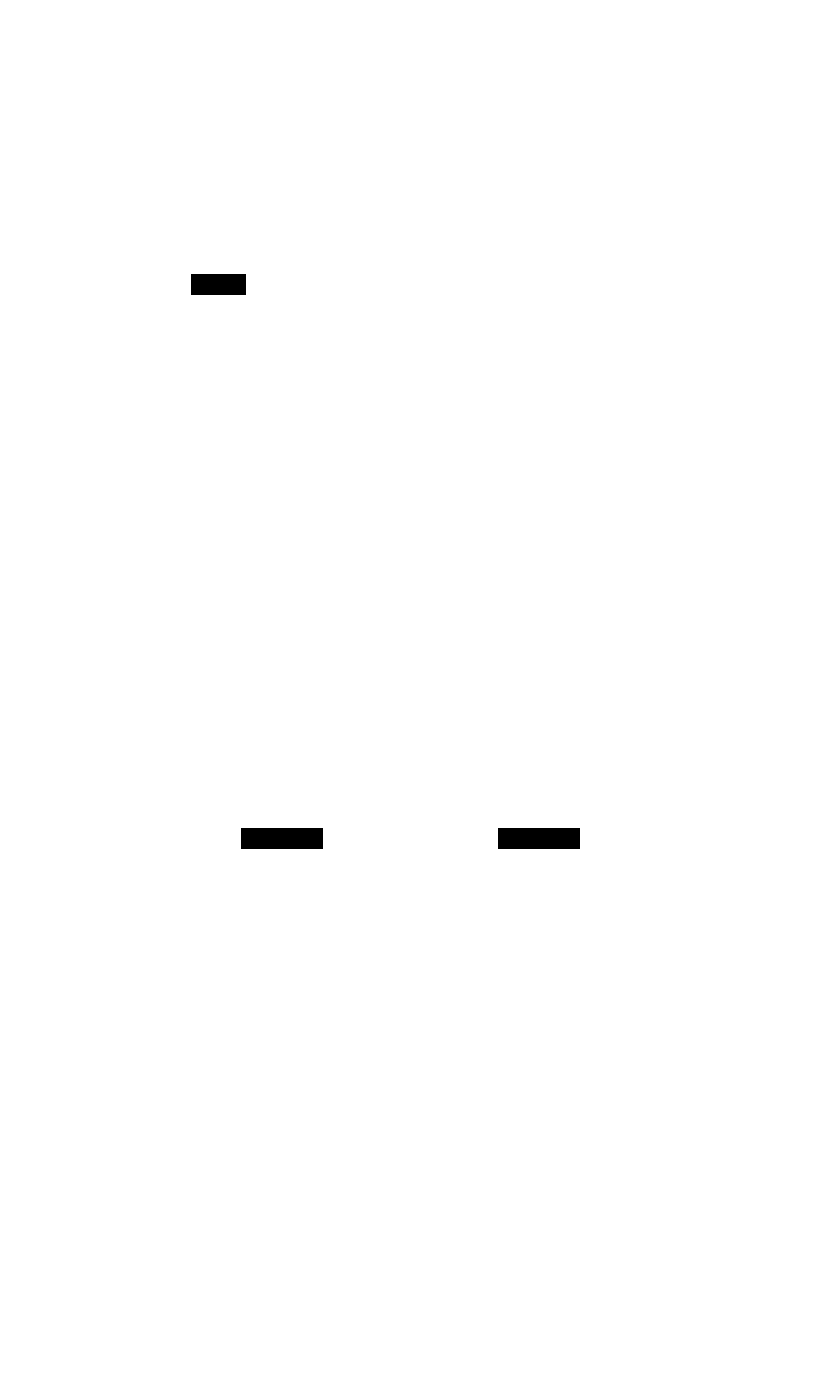
- Embed. Every recording, shape
(leads, time), is passed through a pre-trained ECG foundation model (ECGFounder, HuBERT-ECG or ECG-FM), giving one vector of length D. - Fit Gaussians. Compute the mean vector μ and the covariance matrix Σ of the real embeddings, and the same for the synthetic embeddings.
- Compare. Compute the Fréchet (2-Wasserstein) distance between the two Gaussians.
The math
This is the squared 2-Wasserstein distance between \(\mathcal N(\mu_r,\Sigma_r)\) and \(\mathcal N(\mu_s,\Sigma_s)\): the minimum average squared distance needed to move one Gaussian onto the other. ECGEN-Eval adds \(\varepsilon = 10^{-6}\) to the covariance diagonals before taking the matrix square root, for numerical stability.
Reading the score
- 0 means identical embedding means and covariances. There is no upper bound.
- Values are only comparable within one backbone: each model has its own embedding size and scale.
- Use the same number of recordings for every model you compare (ideally several hundred or more). Fewer samples inflate the score.
- Report a real-vs-real FED (two disjoint halves of the real data) as the reference floor.
- FED only sees what the backbone encodes. Embeddings are trained for diagnosis, so FED is sensitive to clinically relevant morphology and may ignore some artefacts.
- FED summarises whole recordings: there are no per-lead scores.
Installation
FED needs PyTorch and the Hugging Face libraries, which are optional extras:
Backbones
backbone |
Model | Architecture | Pre-training data | Hugging Face repo |
|---|---|---|---|---|
ecgfounder (default) |
ECGFounder | RegNet CNN | 10.7 M ECGs, 150 labels | PKUDigitalHealth/ECGFounder |
hubert_ecg |
HuBERT-ECG (base) | Transformer (HuBERT) | 9.1 M ECGs | Edoardo-BS/hubert-ecg-base |
ecgfm |
ECG-FM | wav2vec 2.0-style CNN + Transformer | 1.5 M ECGs (MIMIC-IV-ECG) | bowang-lab/ECG-FM |
How each adapter turns an (N, L, T) array into (N, D) embeddings:
- ECGFounder expects 12 leads; inputs with fewer leads are padded by repeating the last lead.
- HuBERT-ECG encodes each lead independently, mean-pools the last hidden state over time, then averages the per-lead embeddings.
- ECG-FM expects 12-lead input at 500 Hz and mean-pools the context-encoder output over time.
Match the backbone's expectations
Foundation models are trained on specific sampling rates and lead layouts (typically 12-lead, 500 Hz). Resample and order leads accordingly for meaningful embeddings.
To add a new backbone, see Adding a FED Backbone.
Weights and caching
Weights are downloaded from the Hugging Face Hub on the first compute() call, not at
import or construction time, and cached locally. To control where they go:
If a model repository is gated, log in first with huggingface-cli login.
Use it with ECGEN-Eval
FED is not run by default, because it downloads model weights on first use. Request it with
-m fed:
from ecgen_eval import load_ecg_npy
from ecgen_eval.metrics import FEDMetric

real = load_ecg_npy("real.npy", fs=500)
synth = load_ecg_npy("synth.npy", fs=500)

fed = FEDMetric(backbone="ecgfounder", device="cuda", batch_size=64)
result = fed.compute(real.data, synth.data)
print(result.score, result.extra["backbone"])
Compare all three backbones:
for bb in ["ecgfounder", "hubert_ecg", "ecgfm"]:
    r = FEDMetric(backbone=bb, device="cuda").compute(real.data, synth.data)
    print(f"{bb:>11}: {r.score:.3f}")
All parameters (backbone, device, batch_size, n_subsample, eps) are in the
Metric Reference.
Using the encoders directly
The encoder adapters can be used on their own, for example for t-SNE or UMAP plots of the embeddings:
from ecgen_eval.metrics.encoders import get_encoder

enc = get_encoder("ecgfounder", device="cuda", batch_size=32)
emb = enc.encode(real.data)   # (N, D)
Learn more
- Heusel et al., GANs Trained by a Two Time-Scale Update Rule Converge to a Local Nash Equilibrium, NeurIPS 2017. This paper introduced FID.
- Fréchet Distance (FD): the same formula on handcrafted features.
- The literature review's Paper Database lists the papers that report FID-style embedding distances for ECG.